 Accessibility
 UX/UI
 AI
 Research
 Business
Menstrual and hormonal health
Órbita
A hormonal health app for every stage of life.
A personal project in which I used AI in every step of the design process to create an app that follows people who menstruate or have reached menopause, from the first to the last period and beyond, without putting motherhood at the center.
🎯 The problem
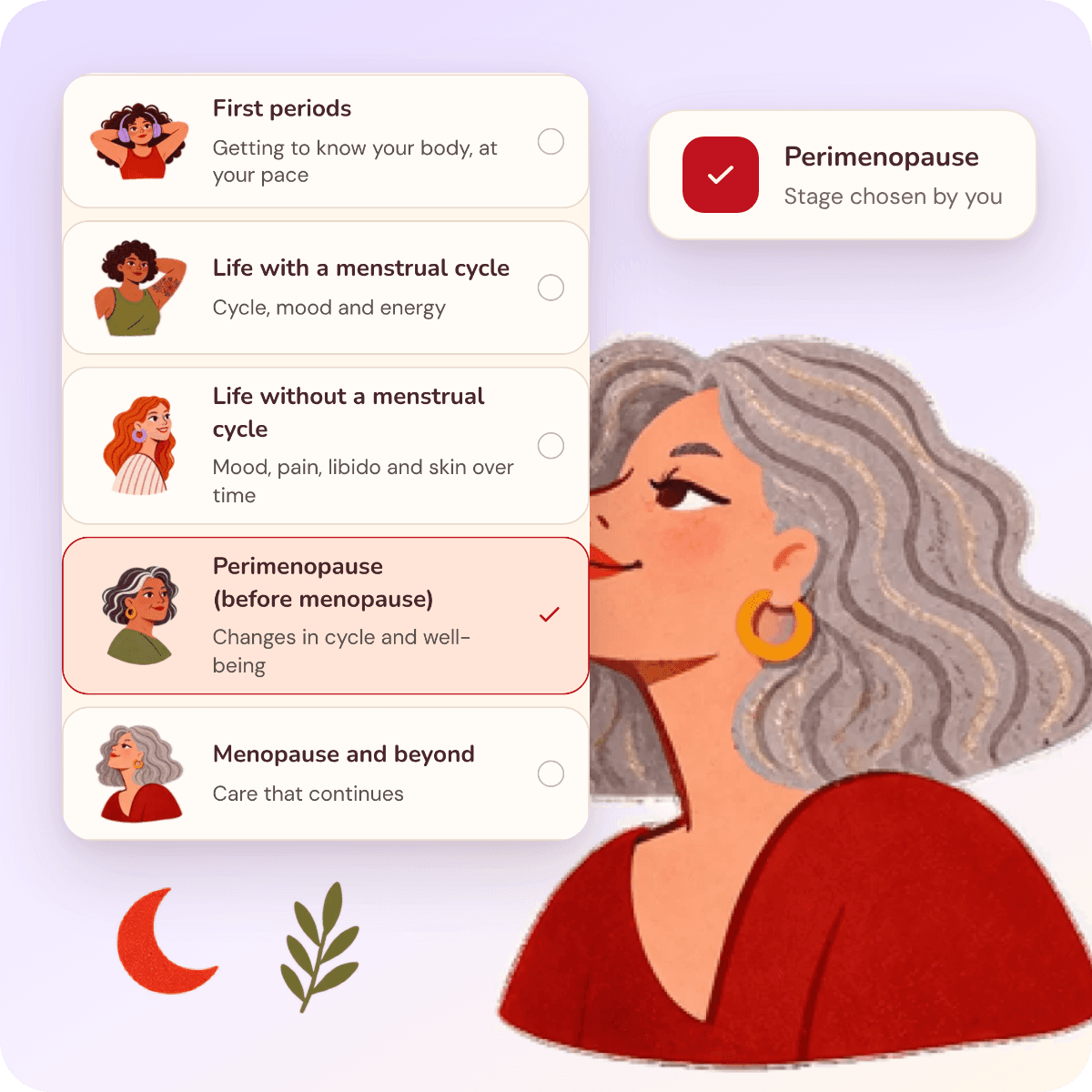
The most popular cycle apps were designed around pregnancy. Fertile window and ovulation take the center of the screen, even for people who don't want children. Those with endometriosis or PCOS, who use an IUD, who are trans or who have reached perimenopause become the exception, and often abandon the app when their stage of life changes.
📃 The proposal
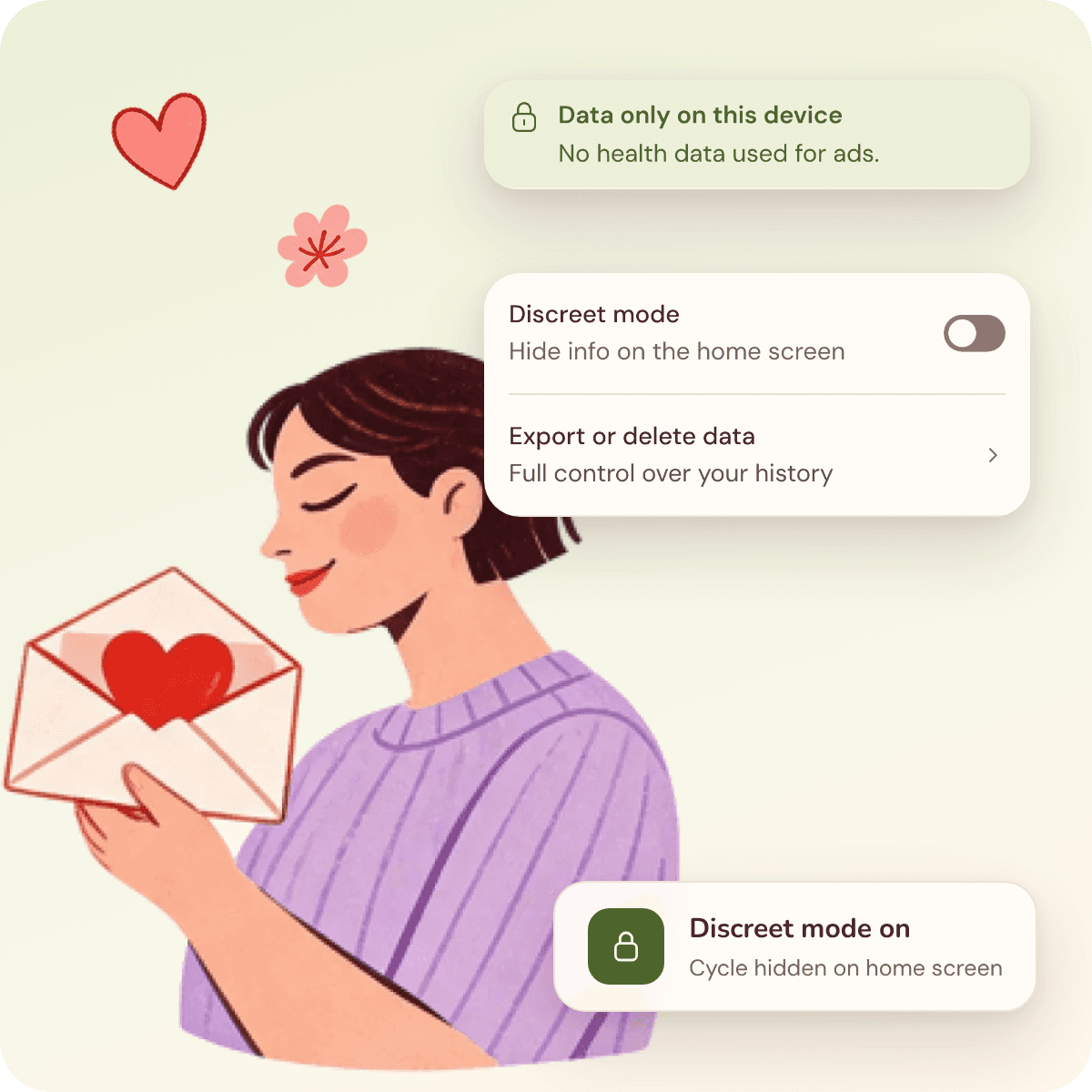
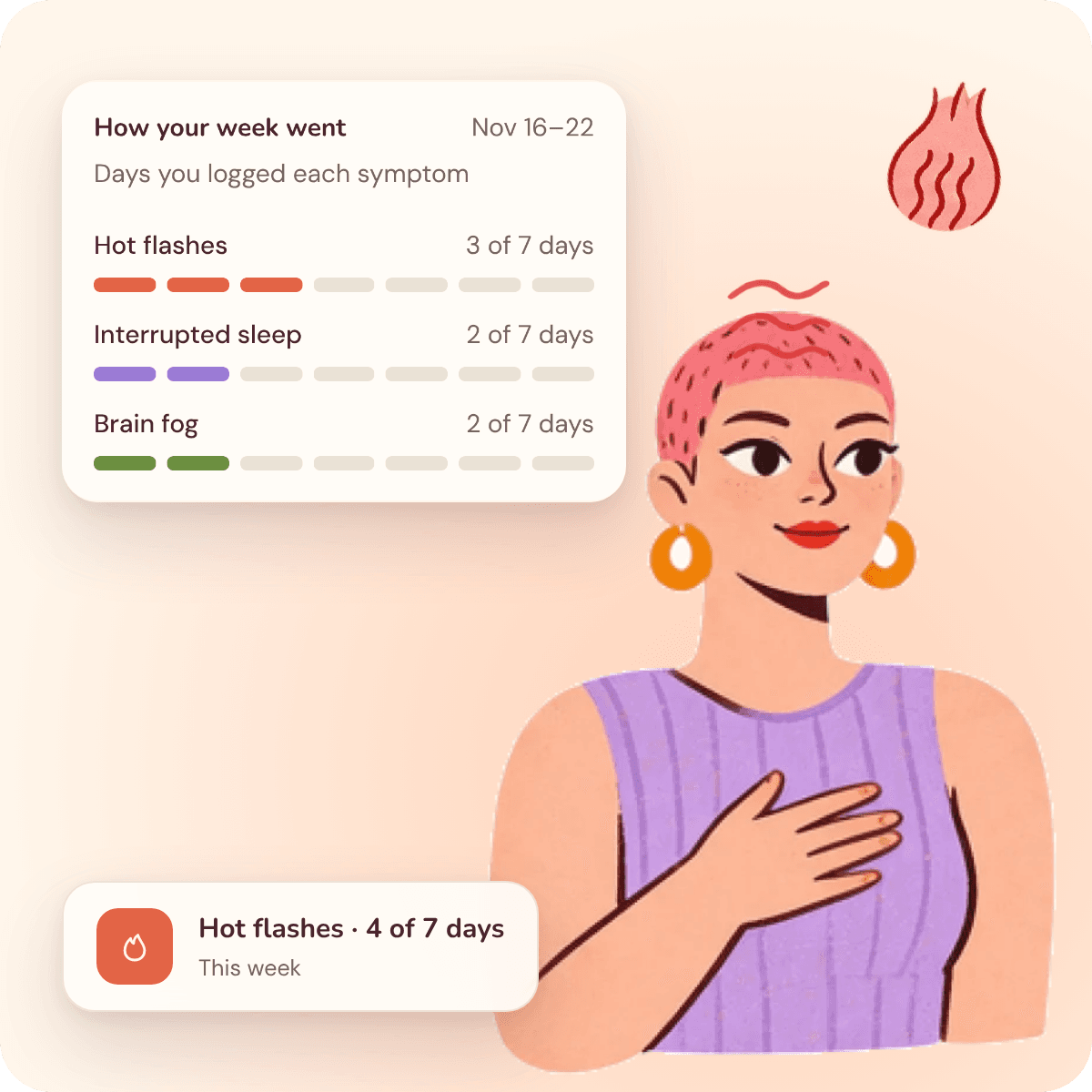
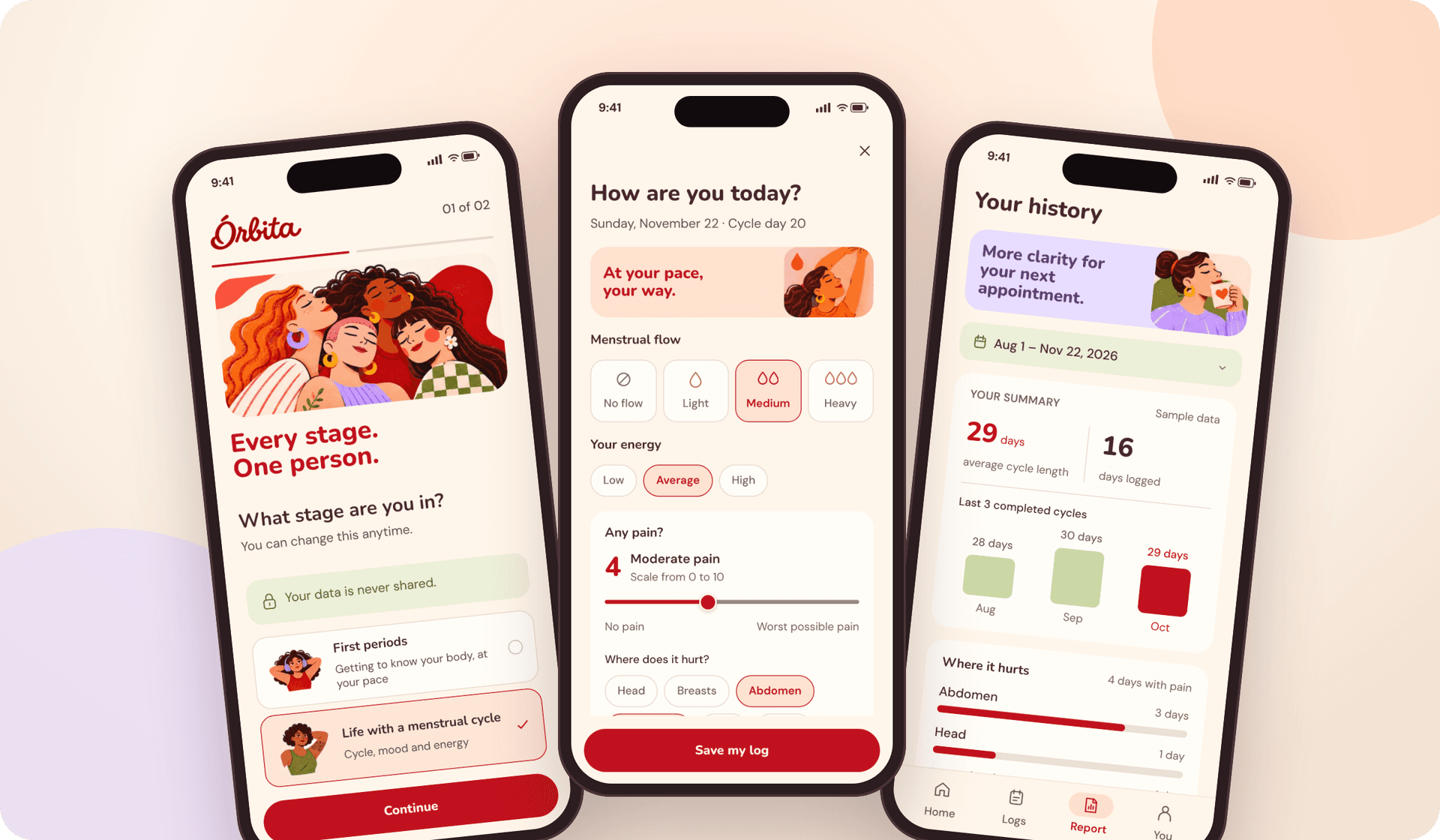
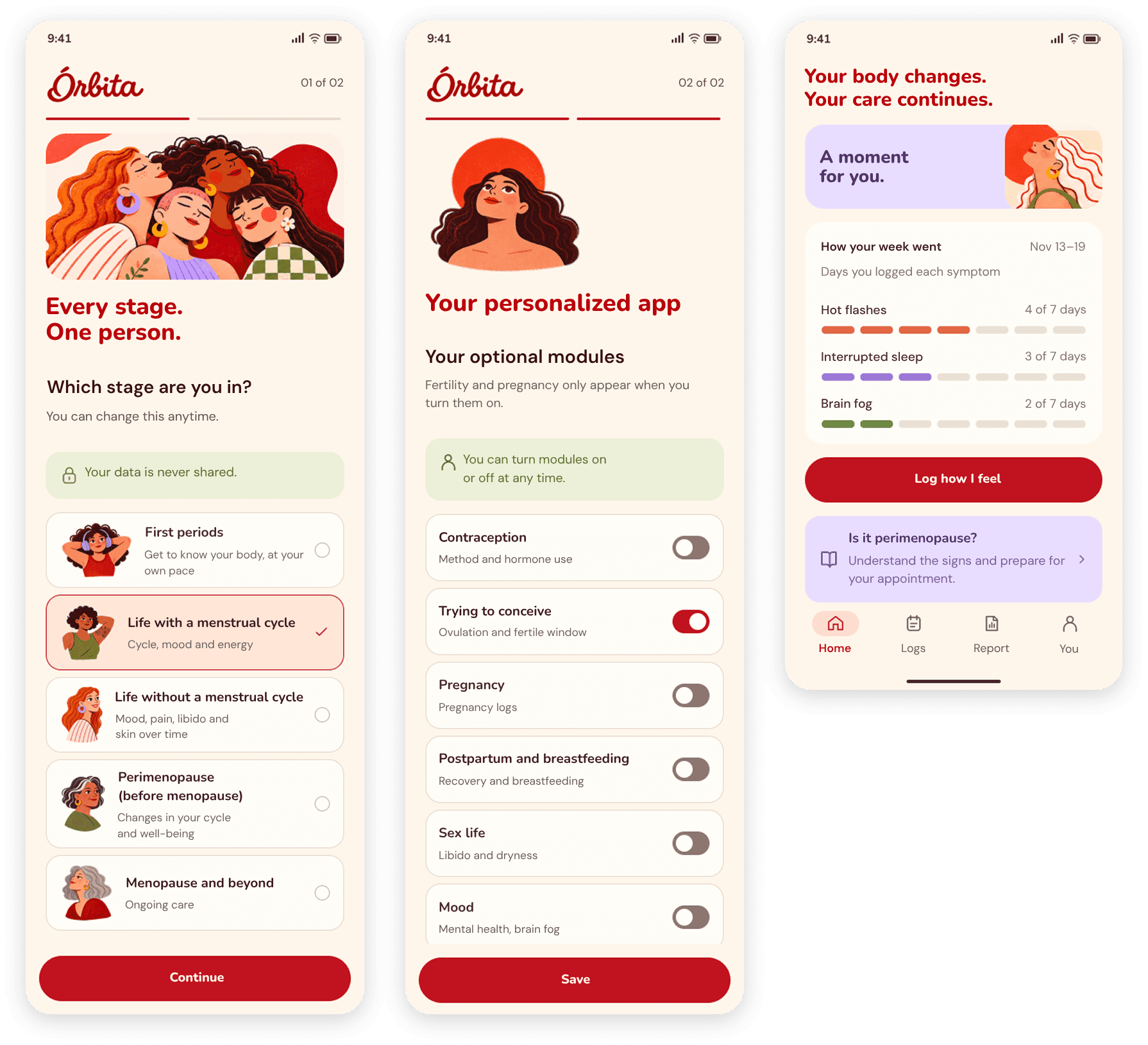
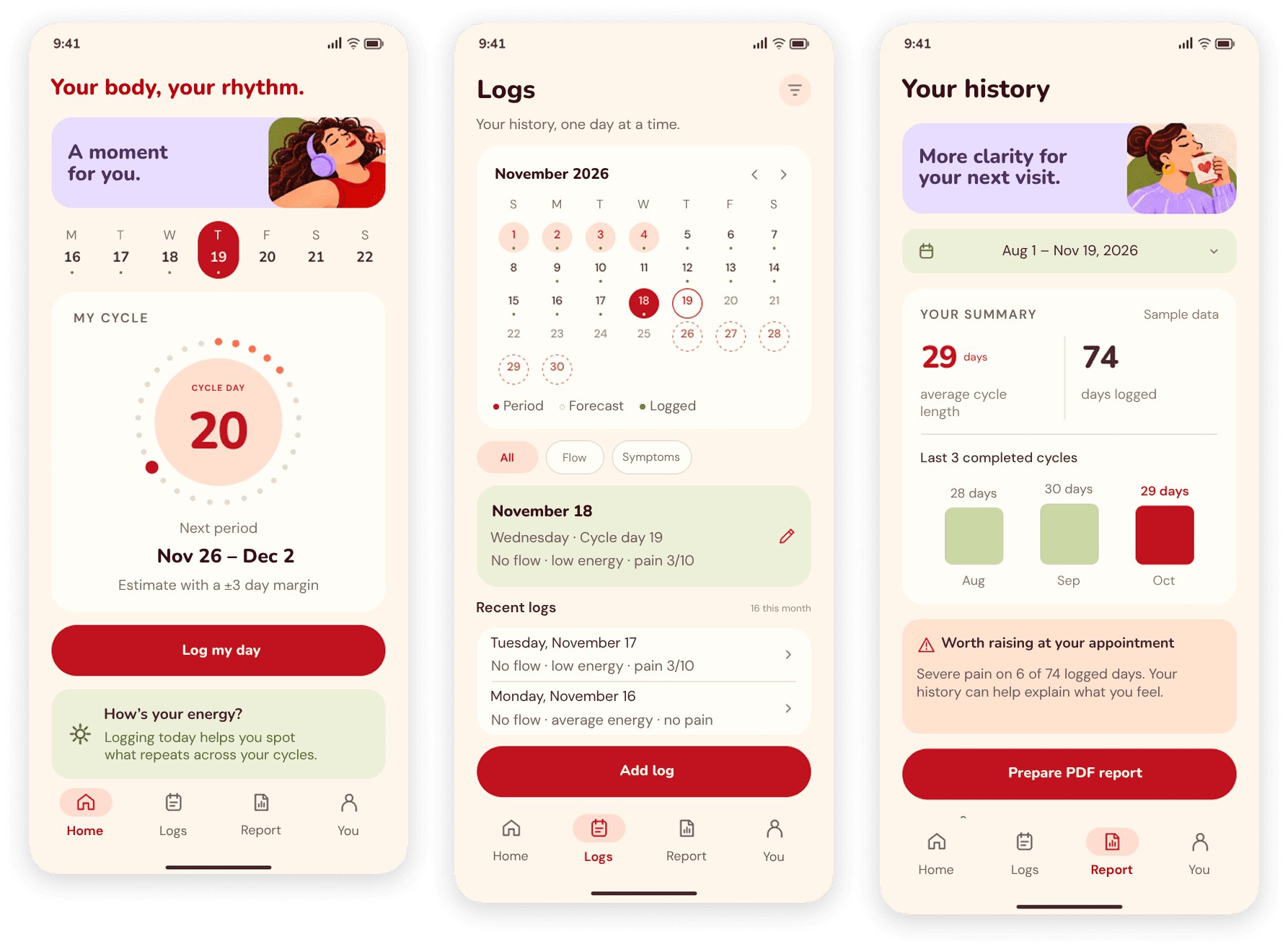
An app that changes along with the person. Órbita starts from the stage of life, not the calendar. Fertility and pregnancy are optional modules, turned off by default. Data stays on the device, with no ads. Day-to-day logging becomes a report to bring to medical appointments.
✏️ How AI fit into the process
I used AI as a partner at every step, while keeping product and design decisions in my hands:
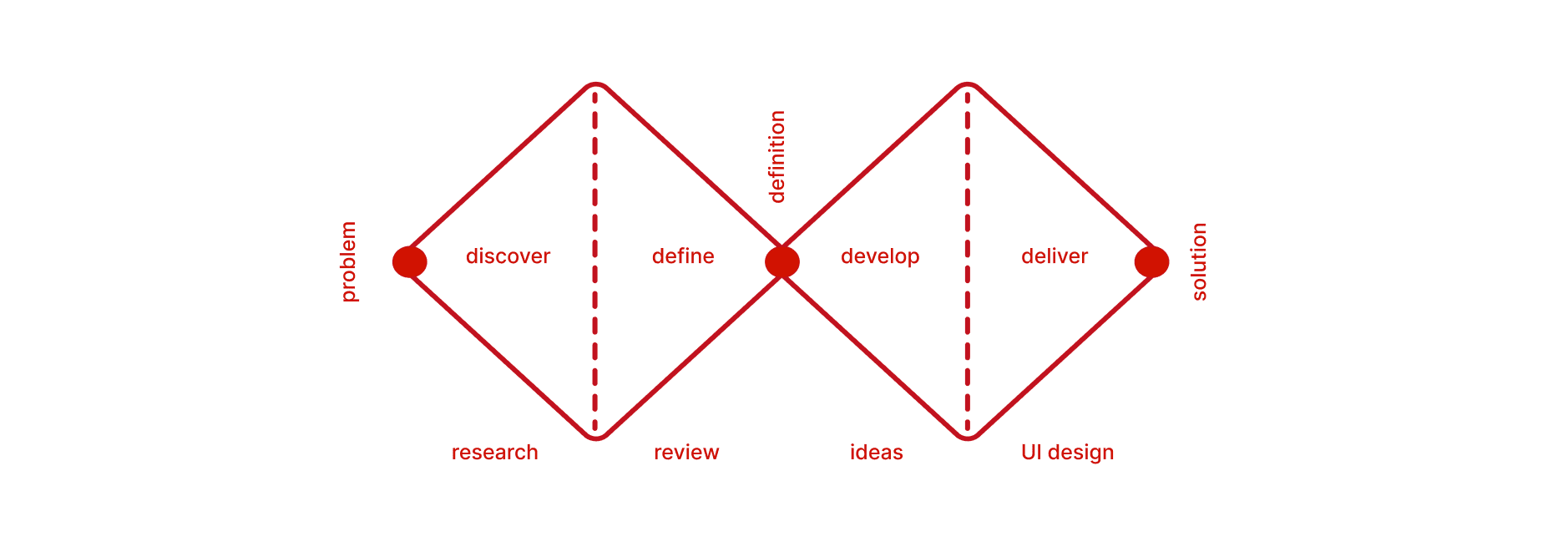
- Discovery: market research, public health data and competitor analysis organized in FigJam.
- Definition: vision document, principles, profiles, journey across life stages and hypotheses with success criteria.
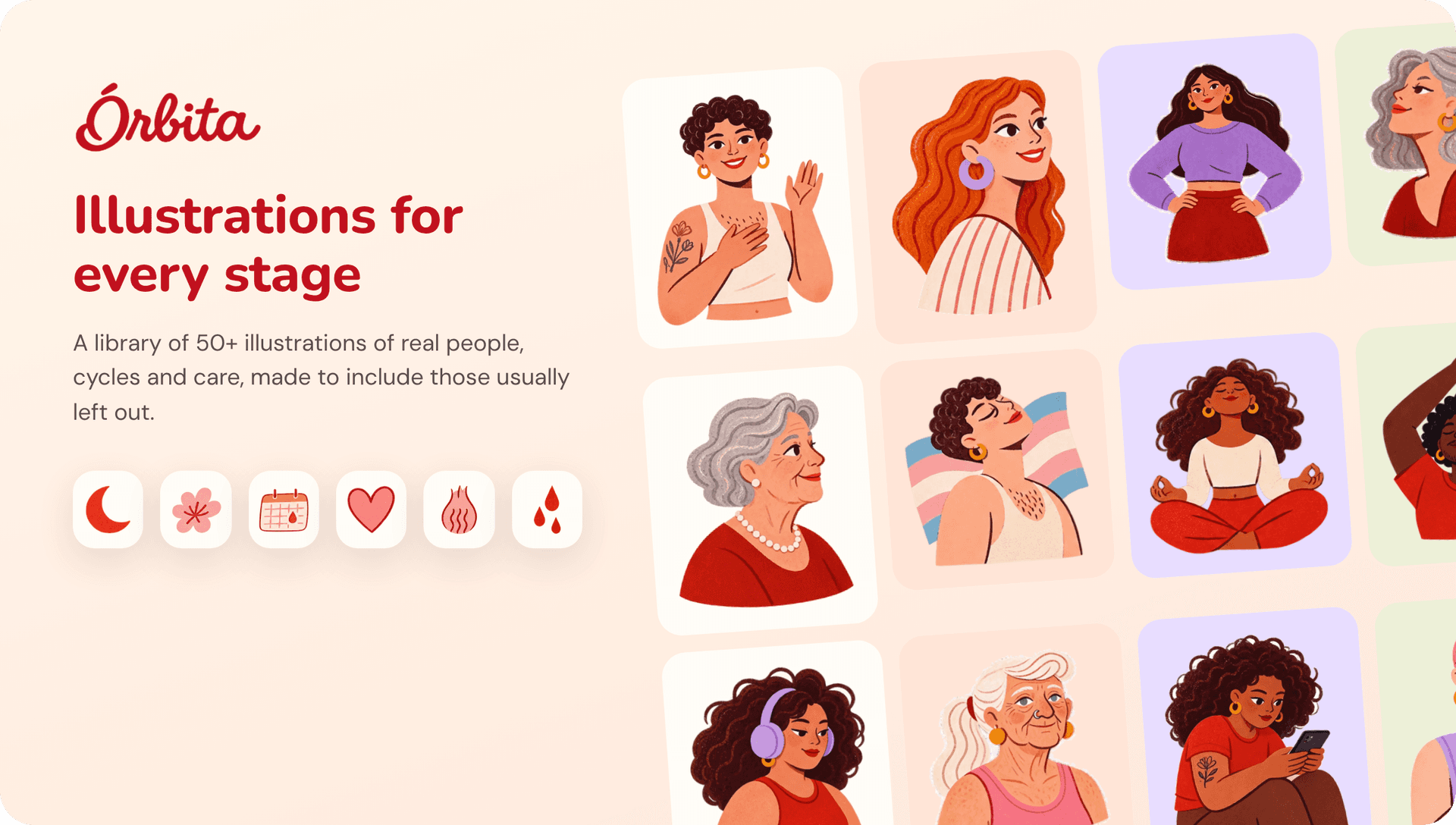
- Design: name exploration, visual identity application, inclusive language review and illustrations.
- Validation: turning the interview script into a form, synthesizing answers and reading the hypotheses.
- Development: turning the design into a working web app with Claude.
My process
Initial research
29M
Brazilian women are in the climacteric or post-menopause
~7 years
is the average time to an endometriosis diagnosis in Brazil
87%
of the cycle apps analyzed share data with third parties
Benchmark
🔍 Competitor analysis
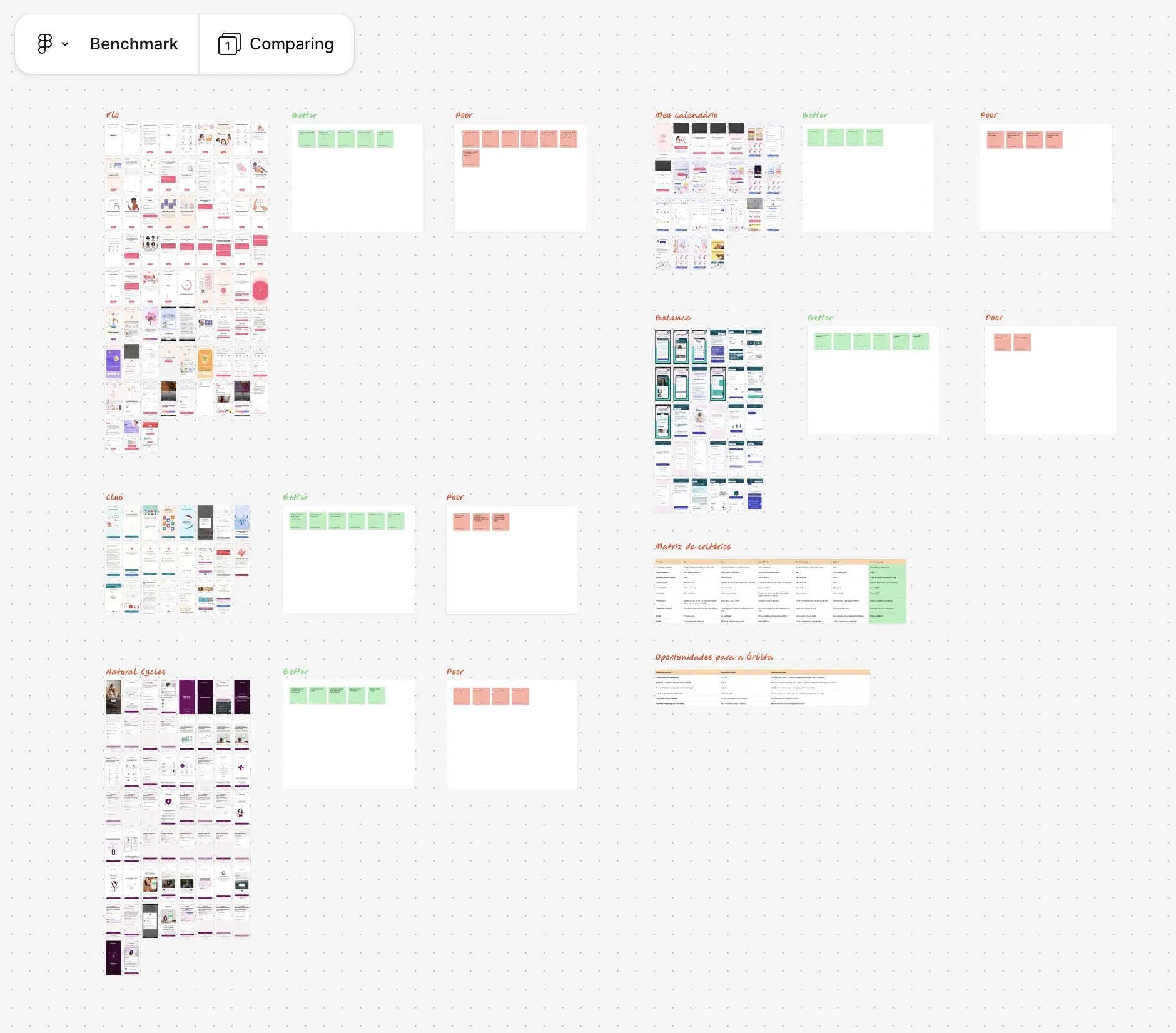
I analyzed six cycle and hormonal health apps: Flo, Clue, Natural Cycles, Meu Calendário, Balance and Apple Health.
What makes Órbita different: Órbita is the only app designed to follow a whole life, from the first period to post-menopause, without putting motherhood at the center. The stage of life guides the experience, and fertility and pregnancy are optional modules. Data stays on the device, with no ads. Day-to-day logging becomes a report for appointments. And the app is designed for Brazil, with Android support and inclusive language for trans and non-binary people.
💡 Hypotheses
- P1 · People who change life stage abandon the app
- P2 · Fear about data doesn't lead to switching apps
- P3 · People who don't want children feel underrepresented
- P4 · There's no history to bring to appointments
- N1 · People would pay from R$ 15 per month
Research
23
people with different profiles took part in the research
63%
of former users stopped because of a change in life stage or method
35%
self-censor when using the app; only 9% stopped using it because of that
39%
of users felt the app wasn't made for them
70%
want to bring their pain log to their gynecologist appointments
32%
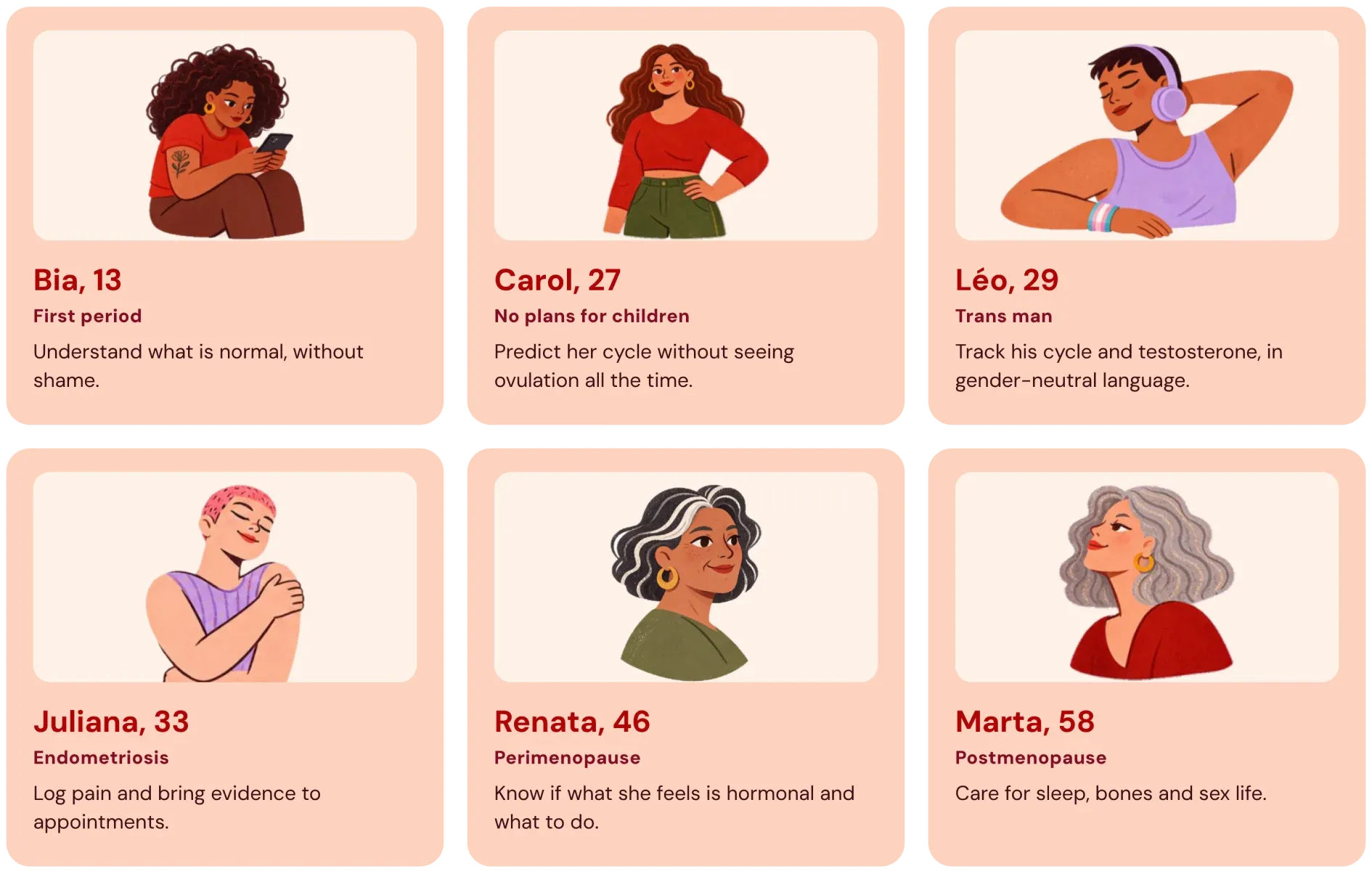
Personas
Journey

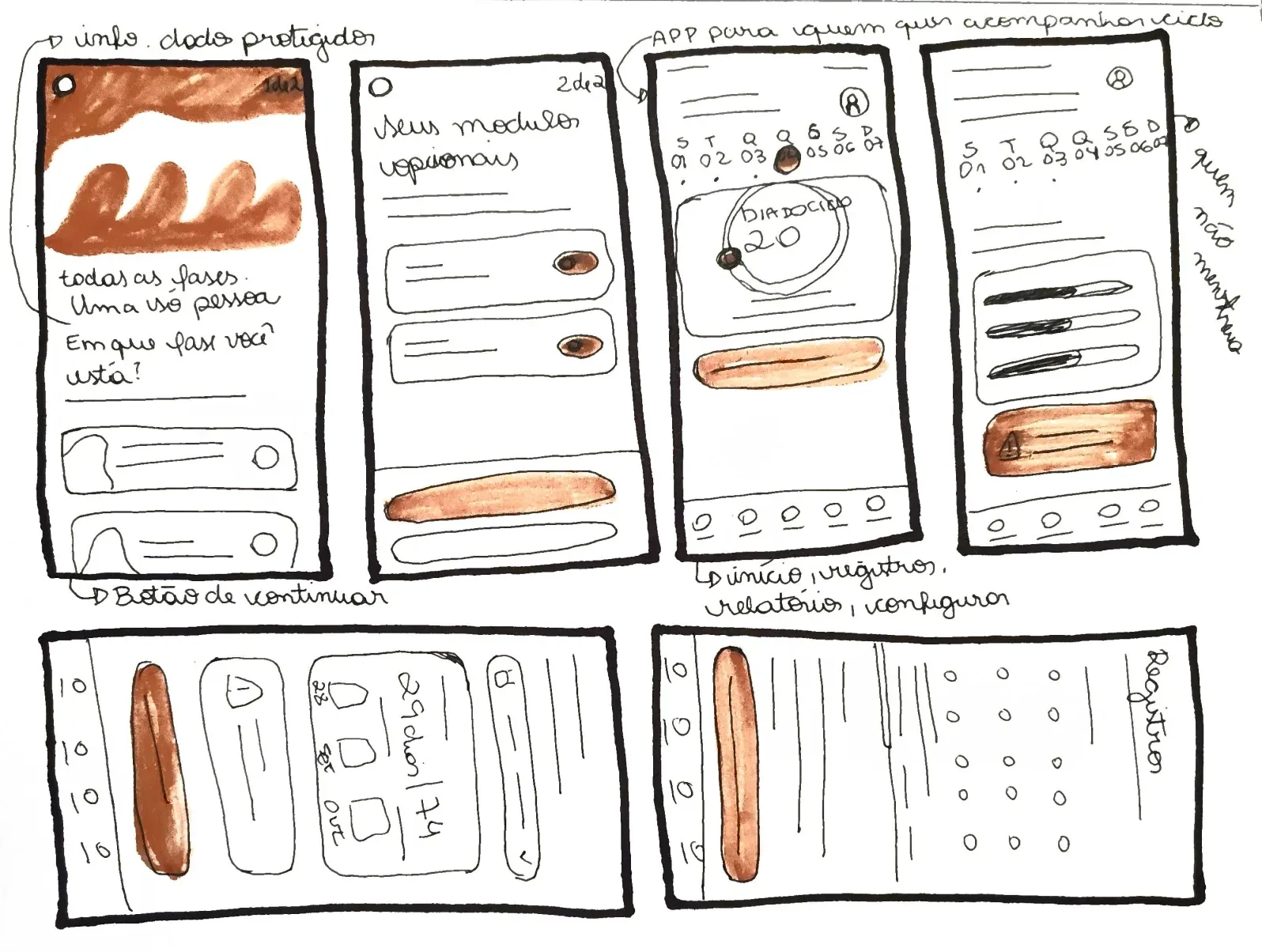
Wireframes
Final screens
🔗 Project link
💼 Business and metrics
- Freemium: every stage free, full report on the paid plan
- Corporate benefit, focused on perimenopause
- Health plans, at scale
- Off the table: ads and selling data
How to know it worked
- Retention at 30 and 90 days
- Changing stage without abandoning the app
- Use beyond fertility
- Reports generated for appointments
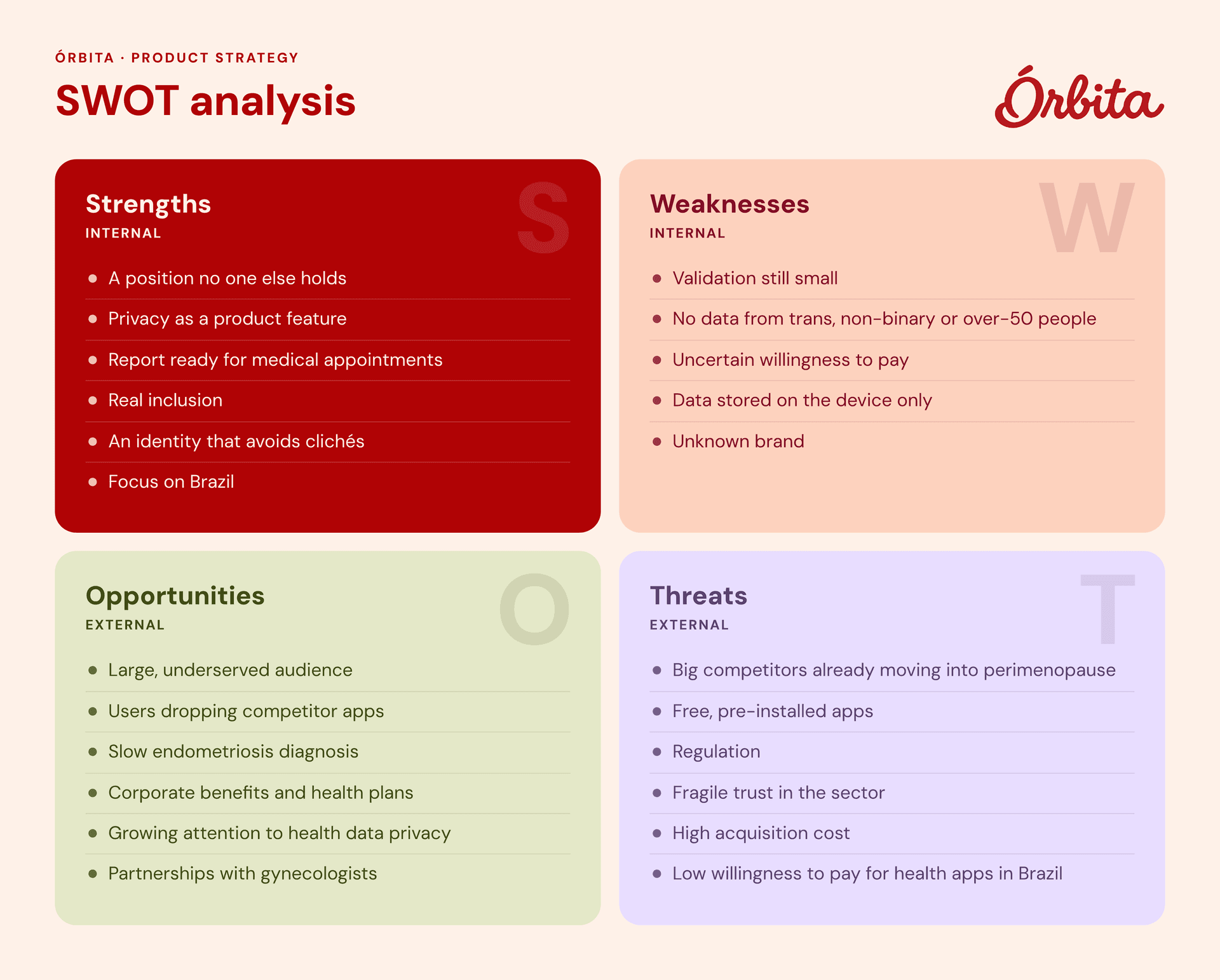
📕 SWOT Analysis
- Use strengths to seize opportunities: position Órbita as the app that doesn't leave you behind when your life stage changes, and use the appointment report and privacy as selling points for corporate benefits.
- Reduce weaknesses in the face of threats: prioritize a new round of research with trans, non-binary and over-40 people, and test pricing before defining the paid plan.
Tools used
- Claude
- GitHub
- Vercel
- ChatGPT
- Figma
- Magnific
Next steps
- New research round with trans and non-binary people and people over 40
- App usability testing
- Van Westendorp price test
- Final adjustments